

Chief Voice: How We Built Sub-100ms Voice AI for Enterprise Support
A look inside Chief Voice's real-time pipeline — how we chained speech recognition, language reasoning, and speech synthesis into a single sub-100ms loop that feels like talking to a person.
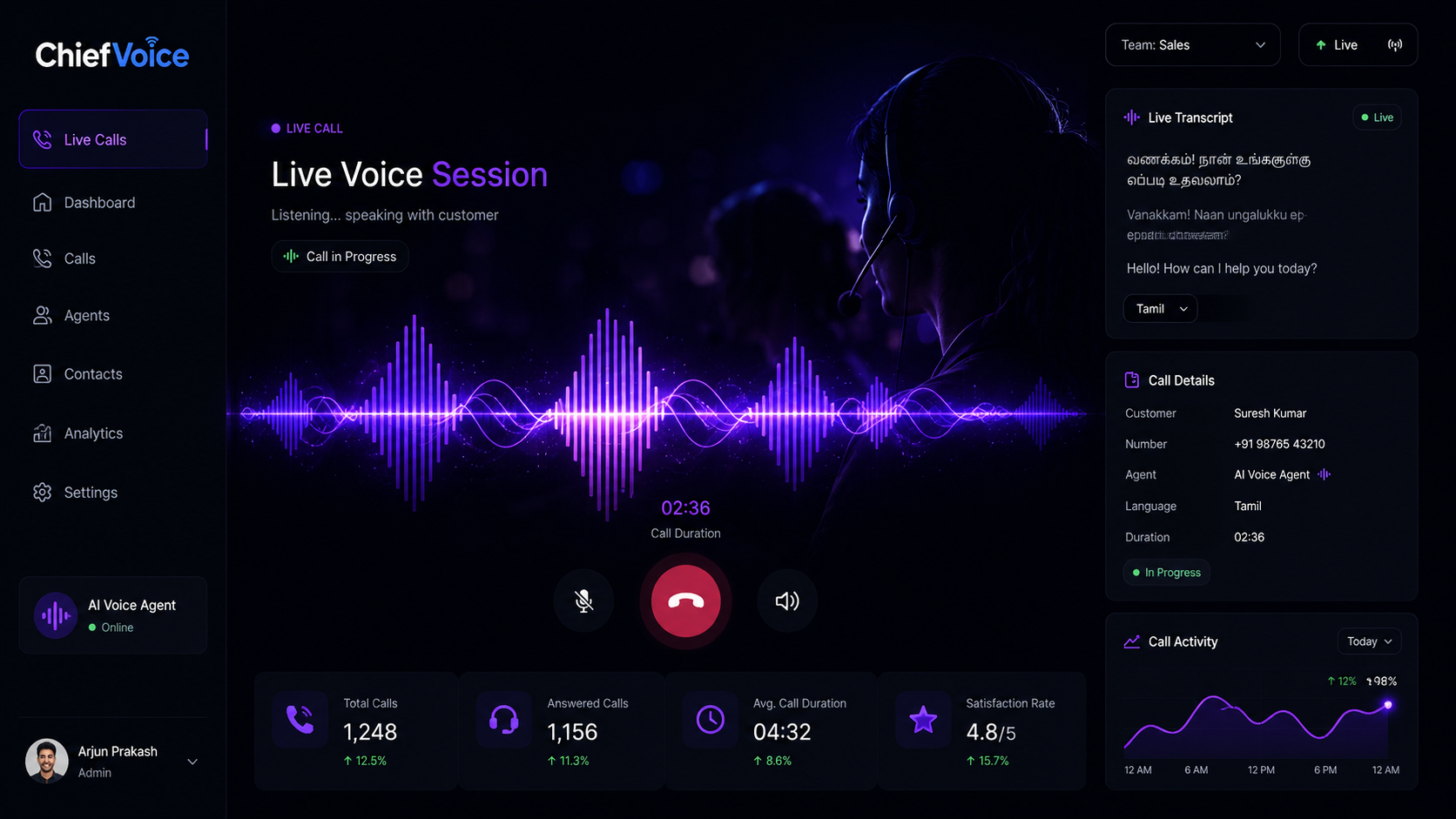
Why latency is the whole product
In text-based AI, a two-second delay is invisible — the user is scanning, thinking, typing their next message anyway. In voice, two seconds is an eternity. It's the gap where a caller says 'hello?' again, assumes the line dropped, and hangs up.
That single constraint shaped almost every architectural decision behind Chief Voice. We didn't set out to build 'a voice AI' — we set out to build a system where the round-trip from a customer finishing a sentence to hearing a natural reply stays under 100 milliseconds, consistently, at call volume.
The pipeline: three systems, one loop
Chief Voice runs three specialized systems in a tight loop: streaming speech recognition that transcribes audio as it arrives rather than waiting for silence, a language model tuned for conversational reasoning rather than long-form generation, and a neural text-to-speech engine that starts speaking before the full response is even finished generating.
The trick isn't any single component — it's overlapping them. Traditional voice bots process sequentially: listen, then think, then speak. Chief Voice starts synthesizing the beginning of a response while the language model is still reasoning about the end of it, the same way a human starts talking before they've fully planned their sentence.
Handling the messy reality of phone calls
Real calls aren't clean audio. There's background noise, regional accents, people talking over each other, and long pauses while someone looks something up. Chief Voice's dialect adapters continuously recalibrate to the caller's accent and phrasing within the first few seconds of a call, and barge-in detection lets a caller interrupt the agent mid-sentence — just like they would with a human agent — without the system getting confused about what was actually said.
We also built in graceful degradation. If network conditions spike latency, Chief Voice shortens its responses and prioritizes acknowledgment ('got it, one second') over silence, because a slightly shorter answer feels more natural than dead air.
Where it plugs in
Chief Voice connects directly into telephony providers and CRMs, so transcripts, summaries, and structured data land in the systems your team already uses — no separate dashboard to check. For most teams, that means a support line, a sales qualification flow, or an internal helpdesk goes from idea to live call in about two weeks.
Want to see this in production?
Talk to us about Chief Voice, X-Suite, or a custom-built AI solution for your business.
Talk to Sales